

Navigating the First Fall Heating Startup
Before the frost sets in, tackling your seasonal home maintenance checklist is the smartest way to prepare your home for changing weather. The transition from warm late-summer days to crisp autumn nights happens fast in our region. Here at Stone Heating and Air, our team frequently sees homeowners caught off guard when they suddenly need to reach for the thermostat to switch from cooling to heating. After months of dormancy, asking your furnace or heat pump to suddenly warm your entire house can lead to a few unexpected surprises. To get a head start, exploring professional HVAC services or enrolling in a comprehensive HVAC maintenance plan ensures your system is ready for the cold.
When that first chilly October morning arrives, many homeowners experience a moment of panic. You turn on the heat, hear the system rumble to life, and suddenly notice a distinct burning smell drifting from your vents. Or perhaps the air coming out feels lukewarm instead of the cozy blast of heat you expected. These initial sensory experiences often leave you wondering if your heating system is functioning normally or if a critical component is failing.
This is a common decision point for anyone managing a home. Knowing the difference between normal seasonal quirks and actual mechanical issues saves you from unnecessary stress. A proactive approach to your heating and cooling equipment ensures safety, comfort, and efficiency throughout the colder months. By taking the guesswork out of these seasonal transitions, a professional HVAC maintenance plan provides the structured oversight your equipment needs to operate smoothly from day one.
Understanding how your specific system behaves after a long summer rest is the foundation of winter preparation. When you know what sounds, smells, and temperatures to expect, you can confidently navigate that initial startup and keep your indoor environment comfortable all season long.
Decoding Normal HVAC Odors vs. Safety Hazards
The science behind that initial burning smell is surprisingly simple, yet it causes more emergency service calls than almost any other fall startup issue. Throughout the summer, while your air conditioner does all the heavy lifting, your furnace sits idle. During these months, microscopic dust particles, pet dander, and airborne debris settle directly onto the furnace's heat exchanger and heating elements.
When you fire up the heater on that first chilly October morning, those components heat up rapidly. The accumulated dust essentially bakes off the metal surfaces, creating a distinct, dusty burning odor that circulates through your ductwork. While the smell can be alarming, understanding the cause helps you react appropriately.
When to Wait It Out
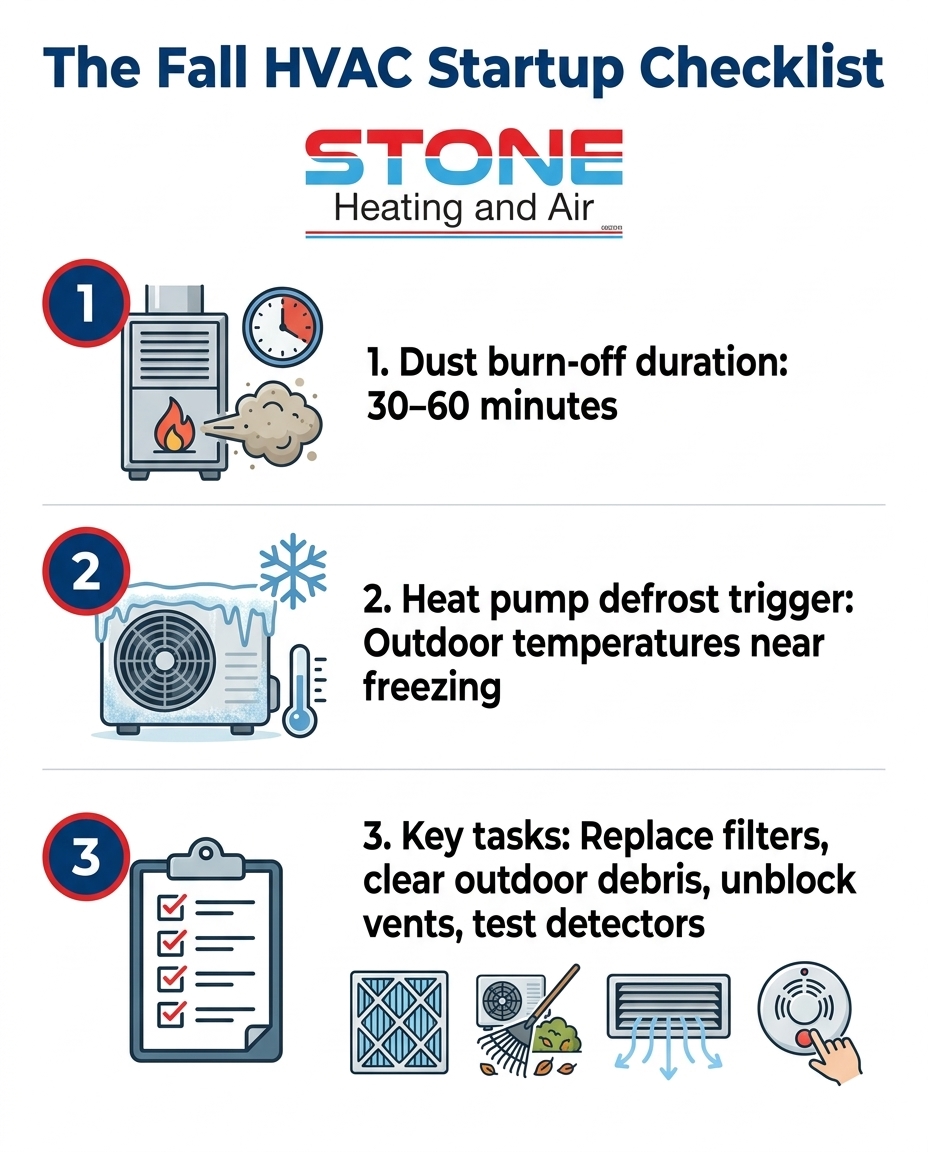
A harmless dust burn-off has very specific characteristics. The odor usually smells like a hot, dusty radiator or a space heater that has just been turned on. Most importantly, this smell is temporary. Under normal conditions, the odor should begin to dissipate within 30 to 60 minutes of the system running continuously. You can often speed up the process by opening a few windows to let fresh air circulate through the house while the system completes its initial cycle. If the smell fades and the system produces steady, warm air, your equipment is likely operating exactly as designed.
When to Call a Professional
Not all odors are harmless, and knowing when to seek professional help is critical for your safety. If the burning smell persists for several hours, or if it changes in character, you need to turn the system off immediately. Acrid, metallic, or electrical smells—often described as melting plastic or burning wires—are never normal. These odors indicate that a component is overheating, a wire is shorting out, or the blower motor is failing. Ignoring persistent or electrical odors puts your home at risk of severe equipment damage or even a fire hazard. Diagnostics for these types of smells require professional tools and training, completely falling outside the realm of DIY intervention.
• Hot, dusty smell — Typical Cause: Summer dust burning off the heat exchanger — Duration: 30 to 60 minutes — Required Action: Wait and ventilate the home
• Melting plastic or electrical — Typical Cause: Overheating wires or failing motor — Duration: Persistent — Required Action: Turn off system, call a professional
• Musty or damp smell — Typical Cause: Mold or mildew in ductwork or coils — Duration: Ongoing when running — Required Action: Schedule a system and duct inspection
• Rotten egg smell — Typical Cause: Natural gas leak — Duration: Immediate and persistent — Required Action: Evacuate, call gas company and HVAC tech
The Core Seasonal Home Maintenance Checklist for HVAC Readiness
While technical repairs always require a licensed technician, there are several actionable, safe steps you can take to prepare your system for the winter workload. Completing these homeowner-level tasks is a vital part of maintaining your heating and cooling system effectively.
1. Replace HVAC Air Filters: According to EPA indoor air quality recommendations, you should inspect your air filters monthly and replace them every 60 to 90 days. A clogged filter severely restricts airflow, forcing the blower motor to work harder and increasing your energy consumption. Start the heating season with a fresh, high-quality pleated filter to protect your equipment and improve your indoor air.
2. Clear Debris Around the Outdoor Unit: If you have a heat pump, the outdoor cabinet needs to breathe. Fall weather often deposits dry leaves, twigs, and overgrown vegetation around the base of the unit. Clear a minimum of two feet of space around the entire perimeter of the heat pump to ensure optimal airflow and prevent debris from getting sucked into the condenser fins.
3. Unblock All Indoor Vents and Returns: Walk through every room in your house and inspect the supply registers and return grilles. Over the summer, it is easy to accidentally slide a bookshelf, rug, or sofa over a vent. Blocked vents disrupt the pressure balance in your ductwork, leading to cold spots in the house and unnecessary strain on the heating system.
4. Test Carbon Monoxide and Smoke Detectors: Before your furnace begins burning fuel regularly, verify that your home's safety monitors are active. Replace the batteries in all smoke and carbon monoxide detectors, and press the test buttons to ensure the alarms sound loudly. This is a non-negotiable safety step before heavy furnace use begins.
Understanding Heat Pump Defrost Cycles During Temperature Swings
If your home relies on a heat pump, you might notice some strange behavior during the transition into late autumn. Heat pumps are incredibly efficient because they do not generate heat from scratch; instead, they extract ambient heat from the outside air and move it indoors. However, when outdoor temperatures drop near freezing, the moisture in the air can freeze on the outdoor unit's coils. To prevent the system from turning into a block of ice, the heat pump automatically enters a defrost mode.
Central Point and the Rogue Valley are particularly prone to these conditions in the fall. In our years of servicing heat pumps across the valley, our technicians have noticed that the specific temperature swings of the region—where afternoons might be mild but early mornings are bitterly cold—frequently trigger early-morning defrost cycles. When the system shifts into defrost, it temporarily reverses its operation, sending warm refrigerant back outside to melt the accumulated ice.
During this cycle, you will likely notice the air coming from your indoor vents feels lukewarm or even slightly cool. The outdoor unit might also make a loud "whoosh" sound and emit visible steam as the ice melts. Many homeowners mistake this temporary cool air and steam for a broken system or a smoking unit. In reality, this is a highly engineered protective function designed to keep your equipment running safely.
The defrost cycle typically lasts only 5 to 15 minutes before the system returns to its normal heating mode. If your system seems stuck in defrost mode, if the outdoor unit remains completely encased in thick ice, or if the indoor air stays cold for hours, that is when poor performance indicates a mechanical failure. In those instances, reaching out for professional heating solutions is necessary to restore proper function.
Winterizing the Rest of Your Home's Envelope
Your heating system does not operate in a vacuum. The overall efficiency of your equipment depends heavily on the condition of your home's thermal envelope. Broadening your seasonal checklist to cover complementary home maintenance tasks ensures that the heat your system produces actually stays inside your living space.
• Upgrade your weatherstripping: Check the seals around all exterior doors and windows. If you can feel a draft or see daylight around the edges, the weatherstripping has likely degraded. Replacing worn seals prevents cold air infiltration, significantly reducing the heating load on your furnace.
• Clean gutters and downspouts: Falling leaves quickly clog gutter systems. When water cannot drain properly, it spills over the edges and can pool around your foundation. In freezing temperatures, blocked gutters also lead to ice dams, which cause severe roof and water damage.
• Inspect attic and crawlspace insulation: Take a quick look in your attic to ensure insulation is evenly distributed and has not been compressed or moved by pests. Proper insulation acts as a blanket for your home, trapping the heat inside and allowing your HVAC system to run shorter, more efficient cycles.
• Transition from a summer mindset: It is easy to forget about cooling issues once the weather turns. If you experienced sluggish cooling in August or delayed necessary AC repair in Central Point, do not ignore it until next spring. Addressing lingering cooling issues now ensures your entire dual-season system is structurally sound and fully winter-ready.
Why Proactive Maintenance Prevents Mid-Winter Breakdowns
While checking filters and clearing away leaves are great habits, a DIY checklist cannot replace the technical depth of a professional inspection. Modern heating systems are complex networks of high-voltage electrical components, pressurized refrigerants, and sensitive sensors. Homeowners simply do not have the specialized tools required to check motor amp draws, calibrate thermostats, or test the microfarads of a run capacitor.
Ignoring the need for technical fall maintenance often leads to a compounding effect. A minor issue, like a slightly worn contactor or a motor pulling too many amps, might go unnoticed during the mild days of November. But when January arrives and the system runs non-stop to combat freezing temperatures, that minor issue quickly escalates into a complete system failure. Proactive professional tune-ups catch these invisible issues early, restoring the system's efficiency and extending the overall lifespan of the equipment.
Real-world events highlight exactly why timing matters. Just last season, our technicians responded to a local homeowner during a sudden late-autumn cold snap when their heater stopped working completely, leaving the home without heat during a severe temperature drop. Our team had to diagnose the emergency issue on the spot and offer multiple system replacement choices to safely restore the home's comfort. Catching failing components in the fall prevents these stressful, urgent outages when you need heating the most.
This is where Stone Heating and Air's local expertise makes a difference. Based on our extensive experience working in Central Point homes, we know that distinguishing minor quirks from major mechanical issues requires a deep understanding of how systems age in our specific climate. A comprehensive HVAC maintenance plan covers all these critical technical inspections, ensuring your electrical connections are tight, your heat exchanger is crack-free, and your system is completely reliable before winter truly begins.
Frequently Asked Questions About Fall HVAC Maintenance
What should be on a fall home maintenance checklist?
A complete fall home maintenance checklist should include replacing your HVAC air filters, clearing outdoor debris away from heat pumps, and testing all smoke and carbon monoxide detectors. You should also inspect weatherstripping around doors and windows to prevent drafts. Finally, cleaning your gutters and scheduling a professional heating tune-up are essential steps to protect your home before freezing temperatures arrive.
Why does my heater smell like burning dust?
Your heater smells like burning dust because microscopic particles settle on the heat exchanger while the furnace sits idle over the summer. When you turn the heat on for the first time in autumn, those heating elements get very hot and bake off the accumulated dust. This creates a distinct, dusty odor that is completely normal and typically harmless. The smell should naturally dissipate within 30 to 60 minutes of operation.
When should I schedule fall HVAC maintenance?
You should schedule fall HVAC maintenance in late September or October, ideally before you need to turn your heating system on for daily use. Booking your tune-up early ensures your equipment is inspected and optimized before the first major cold snap hits. This proactive timing also helps you avoid the busy season rush when technicians are swamped with emergency breakdown calls.
Is it normal for a heat pump to blow cold air at first?
Yes, it is normal for a heat pump to blow cool or lukewarm air temporarily when it enters a defrost cycle. When outdoor temperatures drop near freezing, the system reverses its operation for a few minutes to melt frost off the outdoor coils. Once the ice is cleared, the system will automatically switch back to regular heating mode and resume blowing warm air into your home.
How do I prep my HVAC system for winter?
To prep your HVAC system for winter, start by unblocking all indoor vents and replacing the air filter to guarantee proper airflow. Go outside and clear away any leaves, branches, or overgrown vegetation within two feet of your heat pump or AC condenser. Once the basic DIY steps are done, have a licensed technician inspect the electrical connections, motors, and safety switches to ensure the system is winter-ready.
How long does the burning smell last when turning on the heater for the first time?
The burning dust smell usually lasts between 30 and 60 minutes after turning on the heater for the first time in the season. Opening a few windows can help clear the odor from your home more quickly. If the smell persists for several hours, or if it smells like melting plastic or burning electrical wires, turn the system off immediately and call a professional.
Ensuring Reliable Comfort Before the Freezing Temperatures Arrive
Knowing exactly what to expect from your heating system during a fall startup brings immense peace of mind. By distinguishing a harmless 30-minute dust burn-off from an electrical warning sign, you can operate your equipment confidently. We encourage you to tackle your seasonal home maintenance checklist early, replacing those filters and clearing outdoor debris before the weather turns bitter. When you are ready to secure your home's comfort for the long winter ahead, exploring a professional HVAC maintenance plan ensures every technical detail is handled by experts.