

When Your Boiler Fails: Fast Action for Central Point Homeowners
When your boiler fails during a cold snap in Central Point, OR, it's more than an inconvenience—it's an emergency. A malfunctioning boiler means no heat and no hot water, disrupting your comfort and safety. This guide will help you identify a boiler emergency, take immediate safety steps, and find reliable, 24/7 repair services.
Quick Action Steps for a Boiler Emergency:
1. Turn off your boiler system at the main power switch.
2. Shut off the fuel supply (gas or oil).
3. Call a licensed 24/7 emergency technician immediately.
4. Document symptoms including strange noises, leaks, or error codes.
5. Clear the area around your boiler for safe technician access.
Whether you need immediate help or want to learn more about heating solutions, check out our Central Point heating services guide. For emergency service right now, contact Stone Heat Air's 24/7 emergency team.
This guide walks you through recognizing true boiler emergencies, taking immediate safety steps, finding reliable emergency repair service in Central Point, and preventing future breakdowns. Most boilers provide 15-30 years of reliable service, but performance declines after 20 years—and emergency situations can happen at any age. Knowing the warning signs and proper response keeps your family safe and warm.
Recognizing a Boiler Emergency: Key Warning Signs
When your boiler decides to act up, it often sends out distress signals. Knowing what to look for can help you determine if you're facing a minor hiccup or a full-blown emergency boiler repair in Central Point, OR. Ignoring these signs can lead to bigger problems, so it's crucial to pay attention.
Here are the common signs that indicate your boiler might need urgent attention:
• No Heat or Hot Water: This is perhaps the most obvious and frustrating sign. If your radiators are cold despite the boiler running, or your taps run cold when they should be hot, your boiler isn't doing its job. This often points to a circulation problem, a faulty thermostat, or a complete system breakdown. In Central Point's chilly winters, this quickly becomes an emergency.
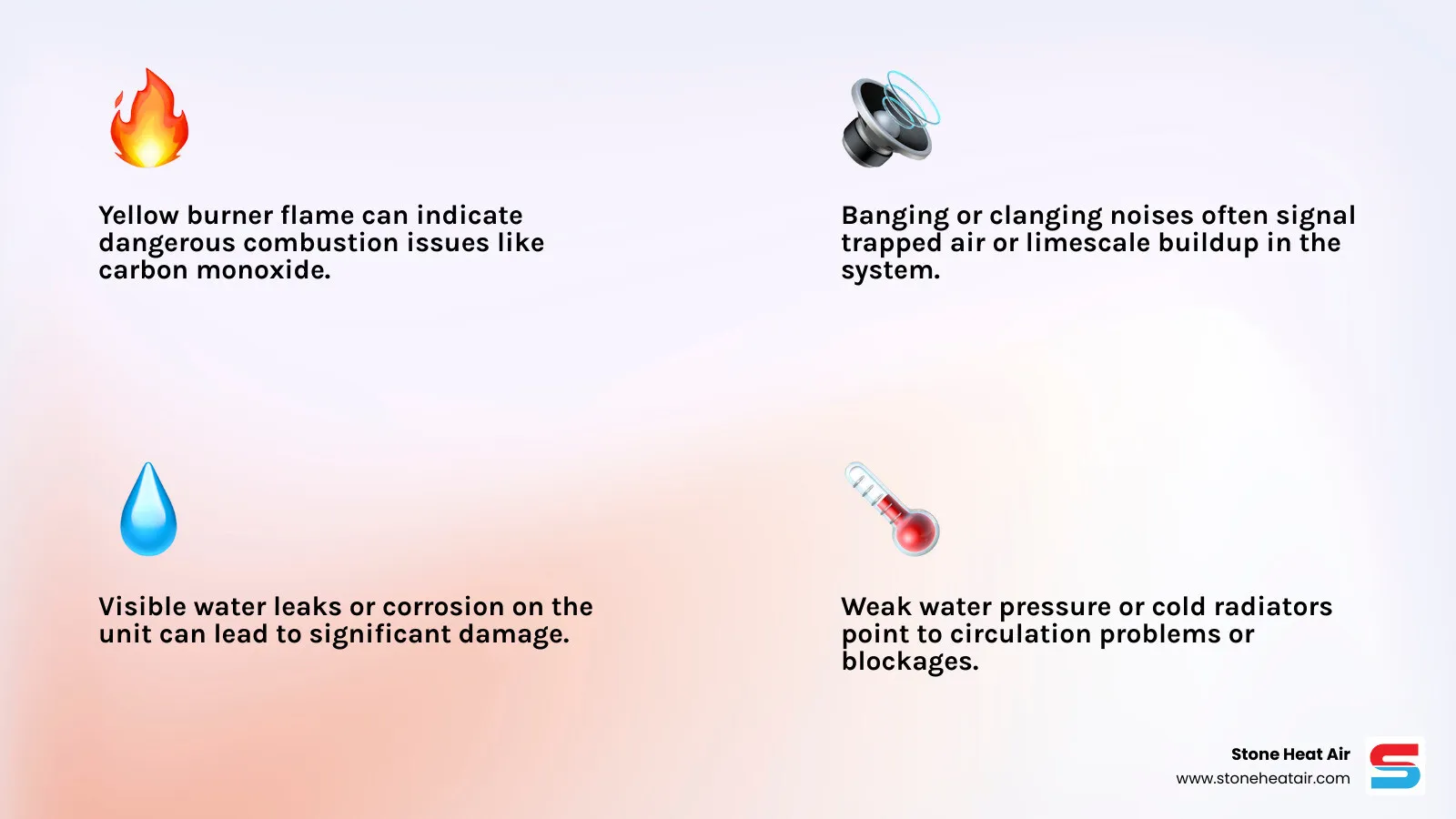
• Strange Noises: Boilers aren't meant to sound like a percussion section. If you hear banging, clanging, gurgling, whistling, or hissing sounds, it's a definite red flag.
— Banging or Clanging: Often called "kettling," this can signal trapped air, mineral (limescale) buildup on the heat exchanger, or a pump issue. Limescale can restrict water flow and make your boiler work harder, reducing efficiency and potentially causing damage.
— Gurgling: This usually indicates air in the system or low water pressure.
— Hissing: Could be a sign of a leak or a pressure release valve issue.
• Visible Water Leaks: Any water pooling around your boiler is a serious concern. Leaks can lead to water damage, rust, and significantly impact your boiler's internal components. Corrosion on the boiler unit itself often accompanies leaks or indicates prolonged moisture exposure. Even small drips shouldn't be ignored, as they can quickly escalate.
• Yellow Burner Flame (for gas boilers): Your gas boiler's flame should be a crisp blue. A yellow or orange flame indicates incomplete combustion, which can produce dangerous carbon monoxide. This is a critical safety issue and requires immediate professional attention.
• Pilot Light Issues: If your pilot light frequently goes out, or struggles to stay lit, it could be due to a faulty thermocouple, a draft, or a more serious gas supply problem.
• Low Water Pressure: If your boiler's pressure gauge consistently reads low, it might indicate a leak in the system, a faulty pressure relief valve, or a problem with the expansion vessel. Low pressure prevents your boiler from circulating hot water effectively.
• System Age Over 15 Years: While boilers can last 15-30 years, their performance often declines after 20 years. If your boiler is an older model and starts showing any of the above signs, it's more prone to breakdowns and might be nearing the end of its lifespan. Older systems often experience component degradation and sediment buildup, making them less reliable.
Any of these signs, especially when combined, qualify as an emergency requiring immediate attention. Delaying repair can not only leave you without heat but can also pose significant safety risks. For more insights on keeping your boiler in top shape, check out our guide on Emergency Boiler Maintenance in Central Point, OR.
What to Do Immediately in a Boiler Emergency
When your boiler decides to call it quits, especially during a cold Central Point night, panic can set in. But don't worry, there are immediate steps you can take to ensure safety and temporarily mitigate the situation before professional help arrives. Think of these as your first aid for your boiler!
Safety First: Your Top Priority
Before doing anything else, always prioritize safety. If you smell gas, hear a loud hissing sound, or see sparks, evacuate your home immediately and call 911 from a safe location, then call your gas provider.
Once safety is assured, here's what you can do:
1. Turn Off the Boiler System: This is step one for almost any boiler problem. Locate the main power switch for your boiler (it's usually a red switch near the unit, or you can turn it off at your main electrical panel). Shutting off the power prevents further damage to the system and reduces electrical hazards.
2. Shut Off the Fuel Supply:
— For Gas Boilers: Find the gas shut-off valve near your boiler. It's typically a yellow or red handle that runs parallel to the gas pipe when open and perpendicular when closed. Turn it to the closed position.
— For Oil Boilers: Locate the shut-off valve on the oil line leading to the boiler and close it.This step is crucial to prevent fuel leaks, which can be dangerous.
3. Shut Off the Water Supply: If you have a leak, you'll want to stop the flow of water as quickly as possible to minimize water damage.
— Locate the main water shut-off valve for your home (often near where the main water line enters your house, or in the basement/utility closet). Turn it off.
— There might also be isolation valves on the pipes directly connected to your boiler. If you can safely access and turn these off, it's an even more targeted approach.
4. Clear the Area for the Technician: Move any clutter, storage boxes, or laundry away from the boiler. This ensures our technicians have clear access to the unit, allowing them to diagnose and fix the problem quickly and safely. Good access can save valuable time during an emergency boiler repair in Central Point, OR.
5. Document the Problem: Before calling us, take a moment to note down what happened.
— What were you doing when the problem started?
— What specific sounds did you hear?
— Did you see any leaks, and if so, where?
— Are there any error codes displayed on the boiler? (Take a picture if possible!)
— What have you already tried (e.g., reset the boiler)?This information helps our team understand the situation better and can aid in a quicker diagnosis.
While these steps can help mitigate the immediate crisis, remember they are temporary measures. A professional, licensed technician is essential for safe and effective boiler repair. When extreme weather hits, your heating system works overtime. Learn more about preparing for such conditions in our guide on Heating During Extreme Weather.
How to Get Emergency Boiler Repair in Central Point, OR
When your boiler calls it quits, you need fast, reliable help. Finding a trustworthy 24/7 emergency service in Central Point, OR, can feel overwhelming in the middle of a heating crisis. But with the right approach, you can connect with qualified professionals who can get your heat back on.
Finding a Reliable 24/7 Technician
The key to a swift emergency boiler repair in Central Point, OR is knowing who to call before you're shivering.
• Search for Local HVAC Professionals: Start by looking for local companies specializing in boiler services. We proudly serve Central Point, Rogue Valley, Southern Oregon, Roseburg, and Klamath Falls. Our local presence means we understand the unique heating needs and challenges of our Oregon communities.
• Check for 24/7 Availability: A boiler emergency doesn't wait for business hours. Ensure the service provider explicitly states they offer 24/7 emergency services. This is crucial for those late-night or weekend breakdowns.
• Read Recent Customer Reviews: Online reviews can provide valuable insight into a company's reliability, professionalism, and customer service. Look for consistent positive feedback, especially regarding emergency response times and technician expertise.
• Verify Licensing and Insurance: Always choose a licensed and insured technician. This protects you in case of accidents or improper repairs and ensures the technician meets industry standards. Boiler repairs are best handled by licensed technicians due to the expertise required for safe and effective solutions.
Finding a reliable partner for your heating needs is essential. For more detailed guidance, explore our Central Point, OR Heating Company Guide.
Information to Have for Your Emergency Boiler Repair in Central Point, OR Call
When you're facing a boiler emergency, every detail you can provide to the technician helps. Having this information ready when you call can speed up the diagnosis and repair process significantly. Think of yourself as the detective, gathering clues for the expert!
Here's a checklist of information to have on hand:
• Boiler Make and Model: This information is usually found on a label or plate on the unit itself. Knowing the brand and specific model helps us anticipate potential issues and arrive with the right tools or parts.
• Approximate Age of the System: The average lifespan of a boiler is 15-20 years, but performance can decline after 20 years. An older system might suggest different repair strategies or even a conversation about replacement versus repair.
• Detailed Description of the Issue: Don't just say "it's broken." Describe the symptoms thoroughly.
— Is there no heat at all, or just some cold spots?
— Is there no hot water, or is it intermittent?
— What kind of noises are you hearing (banging, hissing, gurgling)?
— Where exactly is the leak, if there is one?
— When did the problem start?
• Any Error Codes Displayed: Many modern boilers have digital displays that show error codes when a fault occurs. Write down the exact code (e.g., "E25," "F.28"). These codes are incredibly helpful for technicians to quickly narrow down the problem.
• What You've Already Tried: Did you try resetting the boiler? Did you check the thermostat settings? Did you turn off the power or gas? Let us know your troubleshooting steps, so we don't repeat them and can proceed with more advanced diagnostics.
Having this information readily available allows our team to understand your situation quickly and dispatch the most appropriate technician, equipped for your specific emergency boiler repair in Central Point, OR.
From Repair to Prevention: Securing Your Home's Comfort
Dealing with an emergency boiler repair in Central Point, OR is never fun, but understanding the risks of delaying repairs and the benefits of proactive maintenance can help you avoid future headaches.
Risks of Delaying Emergency Boiler Repair
Putting off a boiler repair, even if it seems minor, can have serious consequences:
• Carbon Monoxide Danger: A yellow burner flame instead of blue indicates combustion problems in a boiler, which can produce deadly carbon monoxide gas. This colorless, odorless gas is extremely dangerous and requires immediate attention. Delaying repair in such a scenario puts lives at risk.
• Water Damage Potential: A small leak can quickly become a flood, causing extensive damage to your home's structure, flooring, and belongings. Water damage can be costly to repair and lead to mold growth.
• Complete System Failure: Ignoring warning signs can stress other components of your boiler, leading to a cascade of failures. What might have been a simple, straightforward repair could escalate into needing a full boiler replacement.
• Increased Energy Bills: A malfunctioning boiler works harder to heat your home, consuming more fuel and driving up your utility usage.
• Discomfort and Inconvenience: Being without heat or hot water, especially during Central Point's colder months, is uncomfortable and disruptive. Delaying repairs means prolonging that discomfort.
Key Differences Between Routine Boiler Maintenance and Emergency Repair
Understanding the distinction between routine maintenance and emergency repair is crucial for responsible homeownership.
• Timing — Routine Maintenance: Scheduled in advance, usually annually. — Emergency Repair: Unplanned, happens when something suddenly goes wrong.
• Goal — Routine Maintenance: Preventative care to ensure efficiency, safety, and longevity. It involves cleaning, inspecting, and tuning components. — Emergency Repair: Restore heat and hot water quickly, address urgent safety issues, and prevent further damage.
• Stress Level — Routine Maintenance: Low. It is a planned, routine visit. — Emergency Repair: High. It usually happens during a breakdown, often in bad weather or at inconvenient times.
• Outcome — Routine Maintenance: Improved reliability, fewer surprise breakdowns, and better comfort all season. — Emergency Repair: Immediate issue resolved; may identify underlying problems that require follow-up or long-term planning.
Importance of Annual Boiler Service and a Maintenance Plan
Regular boiler service is one of the best ways to prevent emergencies. During an annual visit, a technician can:
• Inspect critical components for wear or damage.
• Clean burners, heat exchangers, and other parts that affect efficiency.
• Check combustion, ventilation, and safety controls.
• Verify system pressure and look for early signs of leaks.
Many homeowners benefit from enrolling in a maintenance plan, such as a membership program that:
• Reminds you when service is due.
• Helps keep your system running smoothly year-round.
• Reduces the likelihood of surprise breakdowns on the coldest days.
Taking a proactive approach protects your home, keeps your family comfortable, and supports the long-term performance of your heating system. To learn more about finding the right local heating partner, explore the Best Heating Company Central Point Guide.