

Your Guide to a Warm and Worry-Free Winter
Boiler maintenance in ashland, or keeps your home warm through cold winters and prevents expensive breakdowns when you need heat most. Regular maintenance improves efficiency, extends your system's life, and catches safety issues before they become emergencies.
Quick Answer: Top Local Boiler Maintenance Services
- Annual tune-ups – Schedule before winter (September-October)
- Professional inspection – NATE-certified technicians check all components
- System cleaning – Remove buildup from burners and heat exchangers
- Safety checks – Test pressure relief valves and carbon monoxide levels
- Emergency repairs – Available 24/7 for breakdowns
If you're looking for reliable heating solutions, check out our guide to heating during extreme weather. When you need professional service, schedule your boiler maintenance today.
Ashland's unique climate and mineral-rich Lithia water create specific challenges for boiler systems. Cold winters mean your boiler works hard for months straight. High mineral content in local water causes scale buildup faster than in other areas. Without regular care, these factors reduce efficiency and shorten your system's lifespan.
Many homeowners wait until something breaks to call for service. That approach costs more and leaves you without heat at the worst possible time. A simple annual tune-up catches small problems early and keeps your system running smoothly all winter long.
Why Regular Boiler Maintenance in Ashland, OR is Non-Negotiable
For homeowners in Ashland, OR, a boiler in peak condition is about smart home management, not just comfort. When winter arrives, a reliable heating system is crucial. That's why regular boiler maintenance in Ashland, OR is non-negotiable. It's key to energy efficiency, a long system lifespan, family safety, and preventing breakdowns at the worst possible moment.
Experts recommend servicing your HVAC system, including your boiler, at least once a year. This best practice guarantees optimal performance and prevents minor issues from escalating into emergency repairs. Boilers are built to last 15 to 20 years, but this lifespan depends heavily on consistent maintenance. Proactively caring for your boiler is an investment in its longevity and reliability.
The Benefits of a Well-Maintained Boiler
Let's explore the tangible advantages that come with a boiler that receives the care it deserves. The benefits of a well-maintained boiler extend far beyond simply having a warm home; they touch on your finances, your comfort, and your safety.
First, you'll experience improved heating performance. A serviced boiler runs more efficiently, heating your home effectively and consistently without cold spots.
Secondly, you'll notice lower energy bills. An efficient boiler uses less fuel to heat your home, which directly translates to reduced energy consumption and lower utility costs.
Third, consistent maintenance leads to an extended equipment life. By catching minor issues early, we prevent them from becoming major problems, helping your boiler reach its expected 15 to 20-year lifespan.
Perhaps one of the most undervalued benefits is peace of mind. Knowing your boiler is professionally inspected, safe, and efficient provides immense security against the stress of a sudden breakdown.
Finally, and critically, regular maintenance improves carbon monoxide safety. Boilers burn fuel, and without proper upkeep, they can leak dangerous carbon monoxide. Our technicians perform crucial safety checks on ventilation and combustion to reduce this risk.
The Risks of Neglecting Your System
While the benefits of maintenance are compelling, the risks of neglecting your boiler are equally, if not more, significant. Skipping those annual check-ups can lead to a cascade of problems that are not only inconvenient but potentially dangerous and expensive. For a deeper understanding of what happens when heating systems fail, you might want to read our article on Emergency Heating Repair in Applegate, OR.
The most immediate risk is sudden system failure. Without preventative care, a small, fixable issue can escalate, leaving you without heat when you need it most.
Neglected boilers also suffer from inefficient operation. As components wear or get dirty, your boiler works harder, leading to higher energy bills.
When a sudden failure occurs, you're often looking at costly emergency repairs. These are typically more expensive than routine maintenance and often happen at the most inconvenient times.
Another significant risk for hydronic systems is potential water damage. Even small leaks can cause considerable damage to your home if left unchecked.
Finally, neglecting your boiler can lead to reduced indoor air quality. Problems with combustion or ventilation can release harmful gases into your home. Strange noises, uneven heating, or rising energy bills are all signs that these risks are becoming realities.
Your Essential Boiler Maintenance Checklist
When it comes to keeping your Ashland home warm and comfortable, our essential boiler maintenance checklist is your go-to resource. While some minor tasks can be handled by diligent homeowners, a comprehensive professional service is paramount for the health and longevity of your system. Our expert technicians perform thorough inspections, cleaning of vital components, crucial pressure checks, and rigorous safety control assessments to ensure your boiler operates flawlessly.
Key Tasks in Professional Boiler Maintenance in Ashland, OR
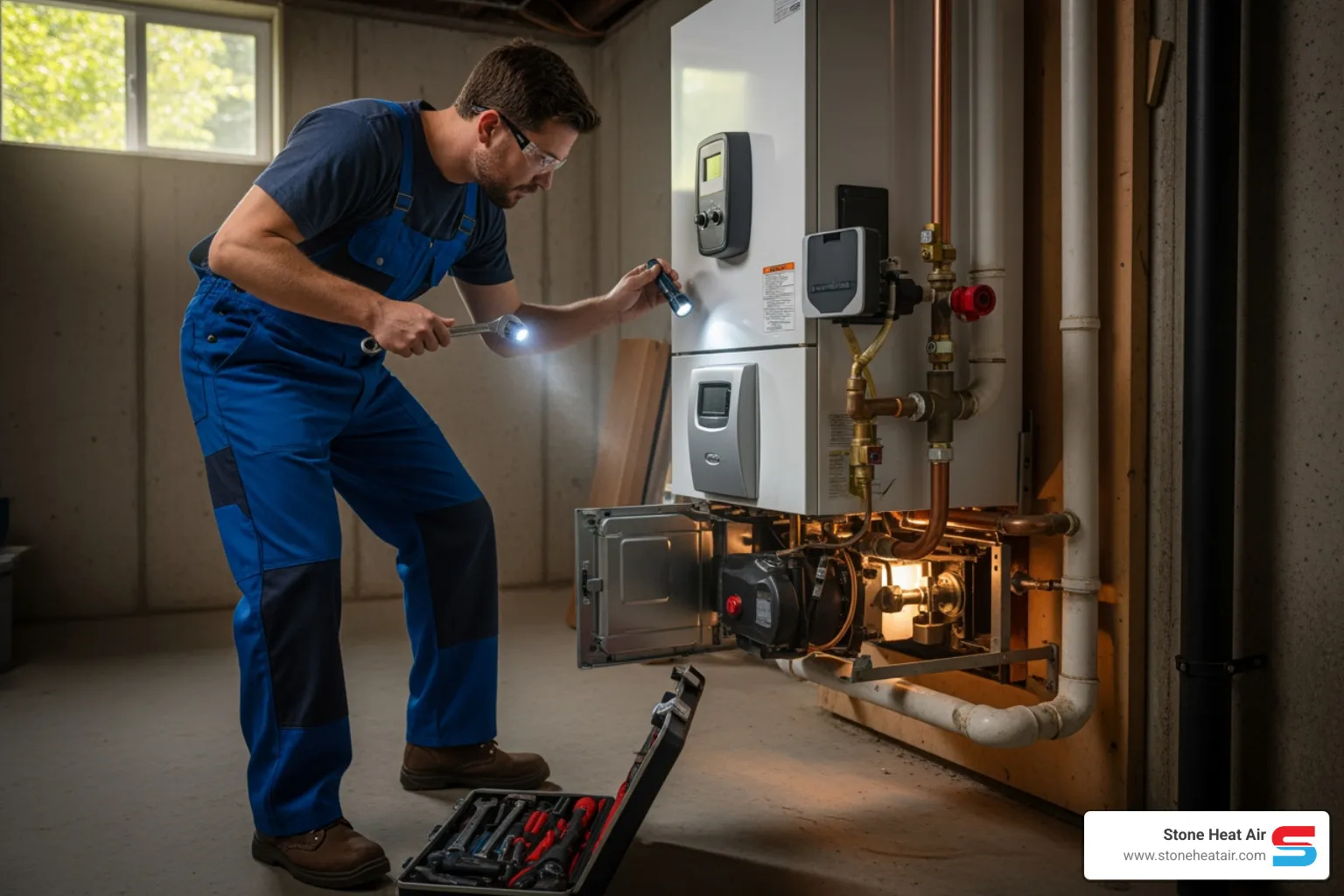
Professional boiler maintenance in Ashland, OR involves a meticulous process that goes far beyond what most homeowners can or should attempt. Our NATE-certified technicians are equipped with the knowledge and tools to provide a comprehensive service. Here’s a look at some of the key tasks we perform, and how they compare to what a homeowner might check:
DIY Homeowner ChecksProfessional Technician ServiceVisual inspection for obvious leaks/damageThorough inspection of all boiler componentsKeeping the area around the boiler clearInspecting vents and flues for blockages/corrosionMonitoring the pressure gaugeTesting the pressure relief valveBleeding radiators (if applicable)Checking for leaks throughout the systemCleaning burners and heat exchangersTesting the pilot light or electronic ignitionFlushing the system to remove sedimentChecking all electrical connections and wiringTesting all safety controls (e.g., limit switches)Assessing combustion efficiency and exhaust gases
During a professional service, our team will inspect vents and flues to ensure combustion byproducts are expelled safely, preventing carbon monoxide buildup.
Next, we check for leaks throughout the system. Even minor leaks can cause pressure drops, water damage, and inefficiency, so prompt detection is key.
Testing the pressure relief valve is a vital safety measure. We ensure this valve functions correctly to release dangerously high pressure.
Cleaning burners and heat exchangers is essential for efficiency. Removing soot and debris buildup allows your boiler to transfer heat effectively and use less fuel.
We also check the pilot light or electronic ignition system. We ensure the pilot flame is strong and blue or that the electronic ignition operates reliably.
Finally, we flush the system to remove sediment and mineral deposits, a crucial step given Ashland's local water quality.
How Ashland's Climate and Water Affect Your Boiler
Ashland's environment poses unique challenges for boilers, making specialized boiler maintenance in Ashland, OR essential.
Our cold Ashland winters mean your boiler runs continuously for long periods. This sustained demand accelerates wear and tear, increasing the risk of a breakdown without regular tune-ups.
The most unique local factor is our Lithia water. Its high mineral content leads to hard water scale buildup inside your boiler. This scale acts as an insulator, forcing the system to work harder and use more energy. Over time, this can cause corrosion and permanent damage, shortening the boiler's lifespan. Regular flushing and descaling, as performed during professional maintenance, are key to mitigating these effects. You can learn more about how different components handle heat by reading our article on All You Need to Know About the Furnace Limit Switch.
The combination of cold winters and mineral-rich water makes proactive maintenance a necessity for an efficient and reliable boiler.
When to Schedule Service: Frequency and Warning Signs
Knowing when to schedule boiler maintenance in Ashland, OR is crucial for preventing unexpected breakdowns and ensuring your home stays warm. It's a combination of proactive planning and attentive observation. Think of it as preparing your home for winter's accept, rather than reacting to its icy grip.
How Often Should You Service Your Boiler?
The consensus among HVAC professionals is clear: annual service is the golden rule. Servicing your boiler once a year is the best defense against unexpected problems and high energy bills.
The ideal time is a pre-winter tune-up in the fall (September-October). This allows technicians to address issues before the heating season, ensuring your system runs at peak efficiency when you need it most.
While annual service is standard, always check your manufacturer guidelines, as some systems may have different requirements. Following these is often crucial for your warranty.
Also, consider high-usage considerations. Older boilers or those in large homes may benefit from more frequent checks. Our Stone Comfort Membership Club offers two annual inspections for comprehensive, proactive care.
Telltale Signs Your Boiler Needs Attention
While annual maintenance is key, your boiler will often communicate when it needs help between services. Paying attention to these telltale signs can prevent a small issue from becoming a major repair. If you notice any of the following, it's time to call for professional boiler maintenance in Ashland, OR:
- Strange noises: Boilers should be quiet. Banging, gurgling, or whistling sounds indicate a problem, such as mineral buildup ("kettling") or trapped air.
- Leaks or dripping: Any visible water around your boiler is a red flag for issues like corrosion or a faulty valve. Address leaks promptly to prevent water damage.
- Uneven heating: If some rooms are cold or radiators don't heat up, your boiler may be struggling. This could be due to trapped air, a pump issue, or other internal problems.
- Yellow pilot flame: A pilot light should be blue. A weak or yellow flame indicates incomplete combustion, a potential carbon monoxide risk that requires immediate professional attention.
- Rising energy bills: If your heating costs are inexplicably climbing despite no change in usage, your boiler is likely losing efficiency and needs a check-up.
- Low boiler pressure: If the pressure gauge consistently drops into the "red zone" or below the recommended range, it indicates a problem like a leak that requires professional inspection.
Ignoring these warning signs can lead to more severe problems, costly emergency repairs, and even compromise the safety of your home. When in doubt, it's always best to call a qualified technician to diagnose and resolve the issue.
Finding a Qualified Boiler Professional in Ashland
Finding a qualified professional for your boiler maintenance in Ashland, OR is paramount for safe, efficient service. You need a team that understands Ashland's unique climate demands. For more general guidance, you might find our Central Point, OR Heating Company Guide helpful.
Look for a team with NATE-certified technicians. NATE (North American Technician Excellence) certification is the industry standard for proven expertise in heating and cooling systems.
Local experience is also invaluable. A professional who understands Ashland's climate and Lithia water can provide more effective maintenance. Our team's experience in the Rogue Valley gives us unique insights into local boiler needs.
Check for positive reviews and a solid reputation, as these offer real-world proof of quality service. Finally, ensure your chosen professional is licensed and insured and offers 24/7 emergency service for your protection and peace of mind.
What to Look For in a Heating Technician
Choosing the right heating technician for your boiler maintenance in Ashland, OR can make all the difference in the performance and longevity of your system. Here's what we believe you should prioritize:
First, look for expertise with boiler systems. Boilers have unique complexities, so you want a technician with specialized experience. Our NATE-certified technicians have comprehensive knowledge of all boiler types.
A reputable company should offer comprehensive maintenance plans. These plans simplify boiler care and prevent costly emergencies. Our Stone Comfort Membership Club, for example, provides two annual inspections and other benefits for proactive care.
Upfront communication is also crucial. A good technician provides clear explanations about the work and any potential issues, with no hidden fees.
Lastly, look for satisfaction guarantees and warranties on repairs. A company that stands behind its work shows confidence in its service quality and commitment to customer care.
DIY Tips for Boiler Maintenance in Ashland, OR
While professional boiler maintenance in Ashland, OR is indispensable, there are several simple yet effective DIY tasks you can perform between professional visits to keep your system running smoothly and safely. These small efforts can contribute significantly to your boiler's efficiency and help you spot potential issues early.
- Visual inspection: Regularly inspect your boiler for leaks, rust, or corrosion. Check for unusual smells (a gas smell requires immediate evacuation and a call to your gas provider) and ensure vents are clear.
- Keeping the area clear: Ensure the area around your boiler is clear of clutter and flammable materials. This allows for proper ventilation, reduces fire hazards, and ensures easy access for technicians.
- Monitoring the pressure gauge: Check your boiler's pressure gauge periodically. If it's consistently too low or too high according to your owner's manual, it signals a problem for a professional.
- Bleeding radiators: If radiators are cold at the top and warm at the bottom, they likely have trapped air. You can release this air with a radiator key to improve heating efficiency.
These DIY tips are meant to supplement, not replace, annual professional boiler maintenance in Ashland, OR. If you're ever unsure about a task or notice something concerning, it's always best to contact a qualified technician.
Keep Your Ashland Home Warm and Safe
Proactive boiler maintenance in Ashland, OR is a vital part of homeownership. Regular care improves energy efficiency, extends system life, ensures safety, and prevents costly emergency repairs. Given the challenges of Ashland's cold winters and mineral-rich Lithia water, professional maintenance is crucial to combat accelerated wear and tear.
We've covered the key professional tasks, the warning signs to watch for, and how to choose a qualified technician. By combining professional service with simple DIY checks, you can ensure your boiler runs reliably.
Ensuring your boiler's system reliability is about winter preparedness and family safety. Don't wait for a breakdown to see the value of proactive care. Enjoy the peace of mind that comes with a well-maintained, efficient, and safe heating system.
At Stone Heat Air, we are committed to honest dealings, 24/7 emergency service, and uninterrupted comfort through our Stone Comfort Membership Club. Our expert team provides top-notch service customized to Ashland's unique climate demands.
For all your heating needs, from routine boiler maintenance in Ashland, OR to emergency repairs, we are here to help.
Contact us for expert heating service and repair today and experience the difference proactive care can make for your Ashland home.